Video Game Retailer Makes Bold $56 Billion Bid for Online Marketplace Giant
Ambitious Acquisition Proposal Raises Eyebrows
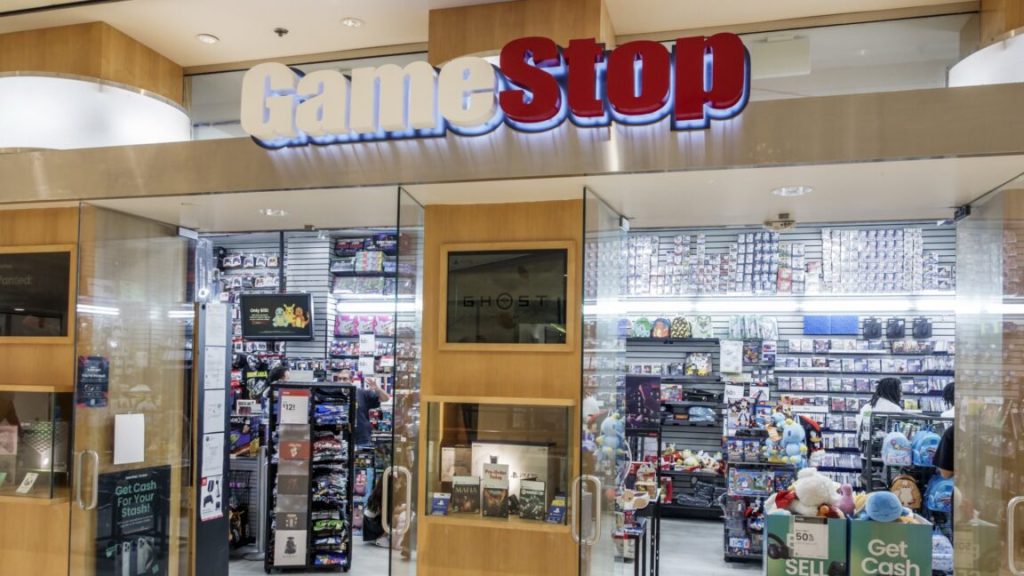
In what I consider one of the most audacious corporate moves of recent years, a struggling video game retailer has submitted an unsolicited $56 billion offer to acquire a major online marketplace platform. This David-versus-Goliath scenario has me questioning whether we’re witnessing bold strategic thinking or corporate delusion.
The gaming company’s leadership believes the online platform has been underperforming and spending excessively on marketing initiatives. Their proposal centers on leveraging approximately 1,600 physical retail locations across the United States to create what they describe as a comprehensive network for product authentication, inventory management, and live commerce broadcasting.
What strikes me as particularly interesting is the vision of transforming retail stores into verification hubs where staff would inspect and authenticate items before they’re listed online. Having observed the collectibles market closely, I think this approach could genuinely address trust issues that plague online marketplaces, especially for high-value items like trading cards and gaming hardware.
Financial Reality Check
Here’s where things get problematic, and frankly, where I think the proposal falls apart under scrutiny. The target company’s market valuation exceeds $48 billion, while the acquiring company is worth roughly $11 billion. The mathematics simply don’t add up in any conventional sense.
The gaming retailer claims to have approximately $9.4 billion in cash and liquid investments, with additional financing commitments from investment banks totaling up to $20 billion. Even with these resources, there’s still a significant funding gap that remains unexplained. When pressed by financial journalists about this discrepancy, company leadership provided evasive responses that frankly made me more skeptical about their preparedness.
This financing challenge is particularly relevant for institutional investors and merger arbitrage specialists who need clear pathways to deal completion. For retail investors, I’d argue this represents exactly the kind of speculative corporate action that should trigger heightened caution.
Strategic Vision Versus Market Reality
The proposed integration strategy involves transforming physical retail locations into multifunctional hubs that would serve as authentication centers, fulfillment nodes, and broadcasting studios for live commerce. While innovative in concept, I believe this overlooks fundamental differences between physical retail operations and digital marketplace dynamics.
Industry analysts have correctly identified that these companies operate under fundamentally different business models. One functions as a marketplace facilitating third-party transactions without inventory risk, while the other operates as a traditional retailer with direct inventory ownership. The proposed synergies seem more theoretical than practical to me.
The acquiring company plans to slash $1.2 billion from the target’s marketing budget, arguing that current spending inefficiently adds users to a platform with universal brand recognition. While cost reduction often drives merger value, I think this particular cut could be counterproductive in the competitive e-commerce landscape.
Who Benefits and Who Doesn’t
This proposal would primarily benefit shareholders of the target company, who would receive a substantial premium over current market prices. The gaming retailer’s shareholders face significant dilution risk and uncertain value creation prospects.
For consumers, the integration could potentially improve product authentication and create new shopping experiences through live commerce features. However, reduced marketing spending might limit platform innovation and user acquisition efforts that currently benefit buyers and sellers.
Professional traders and institutional investors should view this as a high-risk, high-reward scenario with substantial execution challenges. The financing uncertainties make this unsuitable for conservative investment strategies.
Market Performance Indicators
Recent financial performance data reveals concerning trends for the acquiring company. Annual revenue has declined from $6 billion in 2021 to $3.6 billion in 2025, while the target company reported 19% year-over-year revenue growth in their most recent quarter.
The gaming retailer has closed nearly 1,000 stores over the past two years, raising questions about their ability to execute an expansion-focused integration strategy. Despite these challenges, company leadership maintains that their survival in a difficult retail environment demonstrates operational resilience.
In my assessment, this acquisition proposal represents ambitious thinking constrained by financial reality. While the strategic vision has merit, the execution challenges and financing gaps make successful completion highly unlikely. Investors should approach this situation with considerable skepticism and focus on fundamental business performance rather than speculative merger outcomes.