New Research on Cat Spine Flexibility Reveals Secrets Behind Feline Landing Abilities
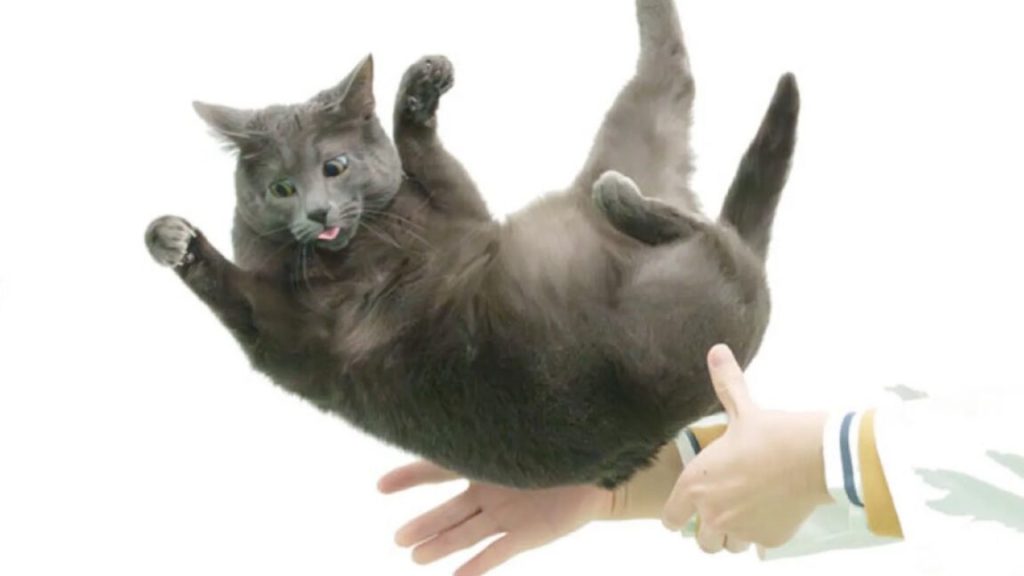
The remarkable ability of cats to consistently land on their feet when falling has puzzled researchers for centuries, sparking debates that trace back to the 1700s. A recent study published in The Anatomical Record provides fresh insights into this phenomenon by examining the unique flexibility characteristics of feline spinal structures.
This enduring scientific mystery gained significant attention in 1894 when French physiologist Etienne-Jules Marey captured high-speed photographs showing a falling cat successfully righting itself mid-air. These images astonished the scientific community, as conventional physics suggested such a maneuver should be impossible for an object in free fall. However, cats are complex living organisms rather than rigid objects, making their aerial dynamics far more intricate than initially understood.
Throughout history, researchers have proposed four primary theories to explain this feline feat. The first, known as the “tuck and turn” model, suggests cats draw in specific limbs to enable rotation of different body segments. James Clerk Maxwell, the renowned 19th-century physicist, proposed the “falling figure skater” theory, where cats manipulate their angular momentum by extending or retracting their paws strategically. The third explanation, “bend and twist,” involves cats bending at their midsection to create counter-rotation between body segments. Finally, the “propeller tail” hypothesis suggests cats use their tails as rotational counters, spinning them like propellers to reverse body rotation.
Previous analysis by University of North Carolina physicist Greg Gbur suggested the bend-and-twist mechanism was most crucial to the cat’s aerial reorientation. However, this new research has prompted him to reconsider, lending additional support to the tuck-and-turn explanation.
Examining Spinal Mechanics
Japanese researchers conducted detailed biomechanical analysis using spines extracted from five donated cat cadavers. They preserved the ligaments and spinal discs while separating thoracic and lumbar sections for individual testing. Using specialized twisting apparatus, they measured the force required to rotate these sections and determined their maximum rotation limits. Additionally, they captured high-speed footage of two cats during controlled drops, documenting their aerial behavior across eight falls each.
The investigation revealed significant differences between upper and lower spinal sections. The thoracic region demonstrated greater rotational capacity than the lumbar area, with a particularly notable characteristic at approximately 50 degrees of twist where resistance virtually disappeared. This “sweet spot” was absent in the lower spine, providing compelling evidence for the tuck-and-turn mechanism. The upper spine’s exceptional flexibility supports the theory that cats prioritize getting their heads upright first, with their anatomy specifically adapted to facilitate this motion.
High-speed photography confirmed the presence of waist flexion consistent with bend-and-twist movements, but notably showed cats extending one rear leg while tucking front paws inward – behavior more characteristic of tuck-and-turn dynamics.
An unexpected discovery emerged regarding directional preference during falls. Both photographed cats showed a strong tendency to rotate rightward – one exclusively so, while the other chose this direction in six of eight attempts. This suggests an inherent biological bias toward right-side rotation, possibly due to asymmetrical internal organ placement that makes rightward turns marginally easier.
Future research faces ongoing challenges, particularly the limitation of single-angle photography that has characterized most studies to date. Multi-perspective imaging capable of generating three-dimensional motion models could provide deeper understanding of feline aerial mechanics. As the debate continues, this latest research adds valuable biomechanical evidence to our understanding of one of nature’s most impressive acrobatic abilities.