Exploring Swedish Design Heritage: A Journey to the Birthplace of Flat-Pack Furniture
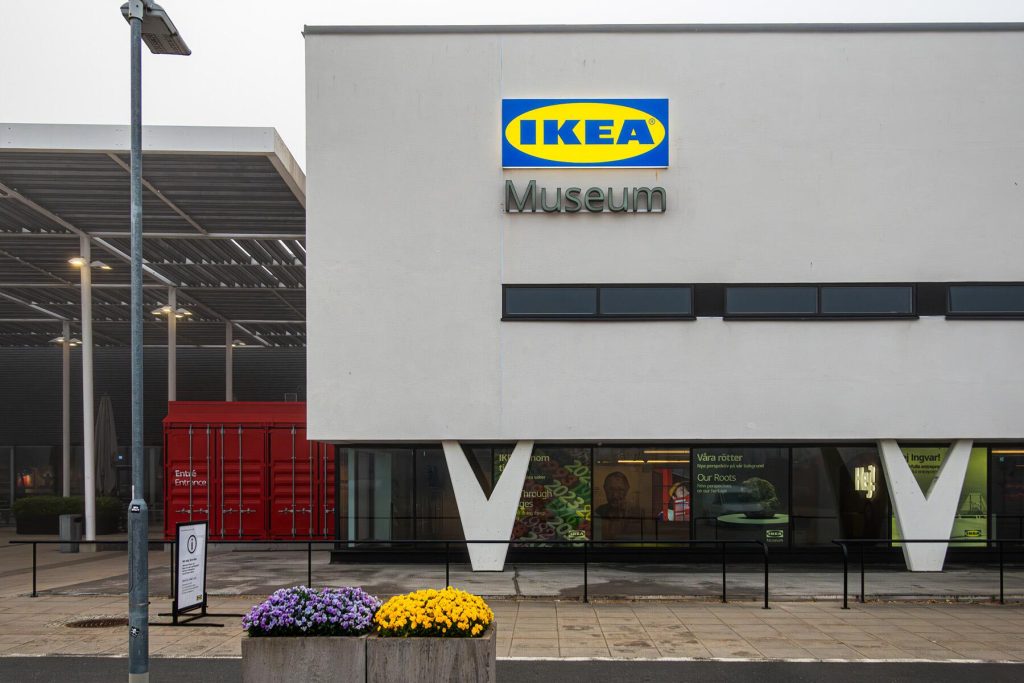
There’s something deeply fascinating about visiting the origins of a global phenomenon, and nowhere is this more apparent than in the small Swedish town of Älmhult. Here, nestled among farmlands in southern Sweden, lies the birthplace of what would become the world’s most recognizable furniture brand. What strikes me most about this pilgrimage to furniture history is how it reveals the complex relationship between corporate mythology and national identity.
The journey north from Malmö takes you through quintessentially Swedish countryside—rolling farmland dusted with winter snow, the kind of landscape that shaped the frugal, resourceful mindset that would later conquer living rooms worldwide. Älmhult itself is a study in contrasts: a town of 18,000 where over 5,000 residents work for the furniture giant, representing more than 50 nationalities. It’s globalization in microcosm, and frankly, it’s exactly what you’d expect from a company that turned Swedish minimalism into a universal language.
The museum, housed in the original 1958 store, offers a masterclass in corporate storytelling. I find it particularly telling how they’ve reconstructed the founder’s teenage workspace—a cramped shed where 17-year-old Ingvar Kamprad sold pens and wallets by mail order. The message is clear: humble beginnings, Swedish thrift, making do with less. It’s compelling narrative, though I can’t help but notice how it glosses over the more complex aspects of the company’s evolution.
Design Democracy or Marketing Genius?
What I find most intriguing about the museum’s presentation is its emphasis on “democratic design”—the notion that good design should be accessible regardless of income. This philosophy is exemplified through historical comparisons, like how King Gustav III simplified ornate French furniture for Swedish production. The modern flat-pack equivalent follows the same principle: elegant design made affordable through customer assembly and mass production.
This approach has undeniable merit. For millions of people worldwide, these products represent their first taste of thoughtful design. Young professionals furnishing their first apartments, families on tight budgets, students making dorm rooms livable—there’s genuine value in making design accessible. However, I think we should also acknowledge the environmental cost of this disposability culture, something the museum touches on but doesn’t fully grapple with.
The Untold Complexities
What’s most revealing about the museum experience is what it chooses to omit. The founder’s four-decade residence in Switzerland and the company’s complex international tax structure barely register in the narrative. For a nation with some of the world’s highest tax rates—taxes that fund the social programs central to Swedish identity—this omission feels significant.
This isn’t necessarily criticism of the museum itself, but rather recognition of how corporate museums function. They’re not academic institutions; they’re brand experiences. Still, for visitors seeking to understand Swedish business culture, these gaps are worth noting.
Who Should Make This Journey?
I believe this destination appeals to several distinct audiences, though not equally. Design enthusiasts will appreciate seeing the evolution of Scandinavian aesthetics through recreated room displays spanning decades. Business students can learn from one of retail’s most successful stories. Cultural tourists interested in Swedish society will find insights into how a small nation exports its values globally.
However, this isn’t for everyone. If you’re looking for critical business analysis or comprehensive corporate history, you’ll be disappointed. The museum serves its purpose as brand storytelling, not investigative journalism. Families with young children might find the experience too focused on corporate history rather than interactive engagement.
Beyond the Corporate Story
What makes this visit worthwhile, despite its limitations, is how it illuminates broader themes about Swedish culture. The restraint in presentation, the emphasis on functionality over flash, the careful balance between pride and humility—these are distinctly Swedish characteristics that extend far beyond furniture retail.
The museum restaurant’s internationalized take on traditional Swedish meatballs perfectly encapsulates this cultural evolution. Local becomes global, then global becomes local again, transformed by its journey. It’s a metaphor for Sweden itself: a small nation that found ways to project its values worldwide while adapting to global realities.
For travelers interested in understanding how Swedish design thinking conquered the world, Älmhult offers valuable insights. Just remember that you’re experiencing carefully curated corporate history, not unfiltered truth. The real story, as always, is more complex than any museum can fully capture.