Six Fascinating Scientific Discoveries That Deserve Your Attention
The world of scientific research moves at breakneck speed, and frankly, some of the most intriguing discoveries get overshadowed by flashier headlines. I believe these overlooked studies often contain the most practical insights for our daily lives and future innovations. This month’s collection of underreported research spans marine biology, archaeology, materials science, geology, mycology, and space weather—proving that curiosity-driven science continues to surprise us in the most unexpected ways.
The Secret Behind Dolphin Speed: A Lesson in Fluid Dynamics
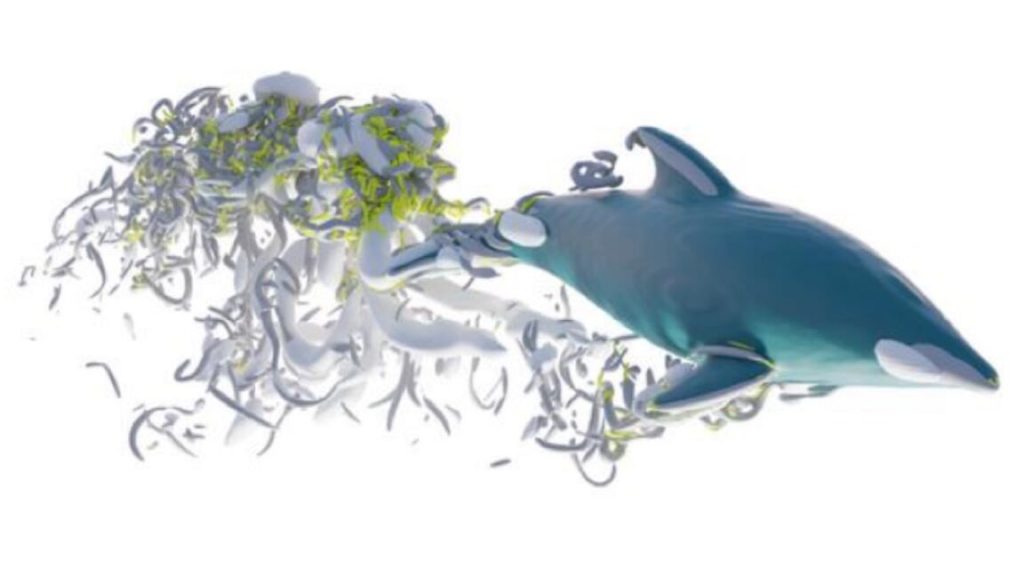
Anyone who’s watched dolphins glide effortlessly through water has wondered about their remarkable swimming prowess. What I find particularly compelling about recent computational research from Japanese scientists is how it reveals the elegant physics behind this natural phenomenon. Using advanced supercomputer simulations, researchers discovered that dolphins create a sophisticated hierarchy of water vortices when they kick their tails.
The key insight? Large vortex rings generated by initial tail movements provide the primary thrust, while smaller secondary vortices are essentially waste products that don’t contribute to forward motion. This research matters enormously for engineers developing underwater robotics—imagine autonomous submarines that move with dolphin-like efficiency. For marine biologists, this work validates what we’ve long suspected about the optimization of natural locomotion systems.
However, I think this research is most valuable for robotics engineers and naval architects rather than casual observers. The practical applications in designing more efficient underwater vehicles could revolutionize everything from deep-sea exploration to military submarines.
Ancient Roman Ships: Floating Archaeological Time Capsules
The analysis of a Roman Republic shipwreck has yielded something I consider far more valuable than gold or pottery—a detailed repair history preserved in waterproofing materials. Researchers examining the Ilovik–Paržine 1 wreck used mass spectrometry to analyze coating samples, discovering that pollen trapped in pine tar and beeswax mixtures tells the story of where repairs were made throughout the ship’s journey.
What fascinates me most is how this technique reveals the practical realities of ancient maritime trade. The discovery of Greek-style coating mixtures alongside Roman construction methods shows the international nature of ancient shipbuilding and repair practices. This research benefits maritime archaeologists and historians studying ancient trade routes, but it’s probably less relevant for general archaeology enthusiasts.
The broader implication here is methodological—examining non-wooden ship materials opens entirely new avenues for understanding ancient maritime technology. I believe this approach will become standard practice in nautical archaeology.
Why This Matters Beyond Academia
This research demonstrates how modern analytical techniques can extract unprecedented detail from archaeological materials. For anyone interested in ancient technology and trade, these findings reveal the sophisticated logistics networks that connected the ancient Mediterranean world.
The Physics of Crushing: Why Full Cans Behave Differently
Sometimes the most profound physics emerges from everyday observations. Researchers at Manchester University investigated why empty soda cans collapse instantly under pressure while full cans buckle in distinctive circular rings. Their findings reveal a fundamental property of liquid-filled cylinders that has significant engineering implications.
The liquid inside actually changes how the metal responds to compression forces, creating a predictable pattern of softening and stiffening that produces the characteristic ring formation. This isn’t just academic curiosity—it’s directly applicable to industrial storage systems, construction materials, and rocket components.
I think this research is most valuable for mechanical engineers and materials scientists working with cylindrical pressure vessels. For the general public, it’s an elegant example of how fundamental physics governs everyday phenomena, but the practical applications are highly specialized.
Australia’s Twelve Apostles: Geological Storytellers
The limestone stacks known as the Twelve Apostles along Australia’s coast function as what researchers aptly call “environmental time capsules.” New analysis reveals these formations are younger than previously believed—between 8.6 and 14 million years old—with their distinctive pillar shapes carved by coastal erosion over just the past few millennia.
What I find most significant is how these geological formations preserve detailed records of ancient climate conditions, sea levels, and tectonic activity. The discovery of slight tilting and fault lines provides evidence of past seismic events, while microscopic fossils reveal temperature variations across millions of years.
This research primarily benefits geologists and climate scientists studying long-term environmental change. For coastal engineers and planners, understanding erosion patterns could inform contemporary coastal management strategies. However, the highly technical nature of the findings limits their immediate relevance to general audiences.
Mushroom Networks: Nature’s Information Superhighway
The revelation that mushroom networks can detect and respond differently to water versus urine represents a breakthrough in understanding fungal communication systems. Japanese researchers discovered that electrical activity within mycelial networks varies based on both the type of stimulus applied and its spatial distribution.
What strikes me as most important is how this research reveals the sophisticated information processing capabilities of fungal networks. The fact that mushrooms reduce communication when water is broadly applied suggests they possess a form of distributed intelligence that eliminates redundant signaling.
This work is particularly relevant for mycologists and researchers studying biological networks, but it also has potential applications in developing bio-inspired communication systems. For gardeners and farmers, understanding how fungal networks respond to different soil conditions could improve agricultural practices.
Implications for Biotechnology
I believe this research opens possibilities for developing biological sensors and communication networks based on fungal systems. The ability to detect chemical signatures like ammonia could lead to innovative environmental monitoring applications.
Medieval Poetry Meets Space Weather Science
Perhaps the most creative interdisciplinary research involves using medieval Japanese poetry to identify historical solar proton events. By correlating descriptions of red auroras in ancient diaries with carbon-14 measurements in tree rings, scientists have developed a novel method for detecting past space weather events.
This approach matters because understanding historical solar activity patterns is crucial for protecting astronauts and satellite systems from dangerous radiation. The discovery that solar cycles were shorter in the medieval period (seven to eight years versus today’s eleven-year cycles) provides valuable data for predicting future space weather.
This research is most valuable for space weather scientists and mission planners, though it also demonstrates the importance of preserving historical documents for scientific research. For the general public, it’s a fascinating example of how literature and science can intersect in unexpected ways.
What I find most compelling about all these studies is how they demonstrate the interconnected nature of scientific knowledge. Whether examining dolphin locomotion or ancient poetry, each discovery adds another piece to our understanding of the natural world and our place within it.